Buying guide5 min readBy Ozyrix
How to hang wall hooks on UK plasterboard, dot-and-dab and brick
Stop wall hooks spinning or pulling out. How to fix coat and towel hooks to UK stud plasterboard, dot-and-dab, and solid brick without wrecking the wall.
A loose coat hook starts the same way in most British homes: someone drives a single screw through a round backplate into plasterboard, hangs a wet coat on it, and within weeks the hook spins sideways and tears a crumbly crater in the wall.
Before you drill, work out what sits behind the paint and why single-screw round hooks fail. Match the hook geometry and anchor to your UK wall type and coat hooks will hold winter jackets, bags and towels cleanly.
1. Identify your UK wall type first
British homes use three main wall builds, and each needs a different fixing:
- Stud partition walls.
12.5 mmplasterboard screwed to vertical timber or metal studs at400 mmor600 mmcentres. Common on internal walls in modern builds and loft conversions. It sounds hollow between studs and duller over each stud. - Dot-and-dab plasterboard. Plasterboard stuck to brick or thermalite block with blobs of gypsum adhesive, leaving a
10–25 mmvoid behind the board. Typical on external walls and homes built from the 1980s onwards. It sounds hollow in patches and solid at each dab. - Solid plastered masonry. Wet plaster laid onto Victorian brick, stone or dense block. It sounds solid everywhere, though soft lime plaster may run
15–20 mmdeep before hitting brick.
Our guide to finding studs in UK walls covers the knuckle-knock test and tracing screw lines with a Magnetic Stud Finder.
2. Check for pipes, cables and safe zones
Never drill blind above a socket, light switch or radiator. Under UK wiring practice, concealed cables should run straight vertically or horizontally from outlets and switches, or within 150 mm of ceilings and corners.
A Magnetic Stud Finder responds only to steel drywall screws and nails—it does not detect copper pipes or live cables. Sweep with a cable and pipe detector first, and follow the medical device manufacturer’s guidance on magnet clearance. The stud finder’s instructions specify keeping it at least 15 cm away from pacemakers and magnetic payment cards.
3. Why single-screw hooks spin loose (and what stops them)
Wall hooks fail mainly from rotational twist, not downward weight. Lifting a coat or hanging a heavy bag puts sideways torque on the fixing:
- Round discs lack grip. Smooth circular backplates held by one central screw rely on friction against paint. Once the screw shifts slightly, it chews out the gypsum core of the plasterboard (drywall) until the plug pulls free.
- Exposed screws loosen. A countersunk wood screw in a soft plastic plug tears forward under load.
- Flat-sided profiles and recessed hanger bolts stay put. Hexagonal or octagonal hooks give you flat faces to grip with a spanner or cloth during fitting and keep alignment crisp by eye. Screwed onto a dual-thread M4 hanger bolt, the hook shoulder pulls flush to the wall with no exposed screw head.
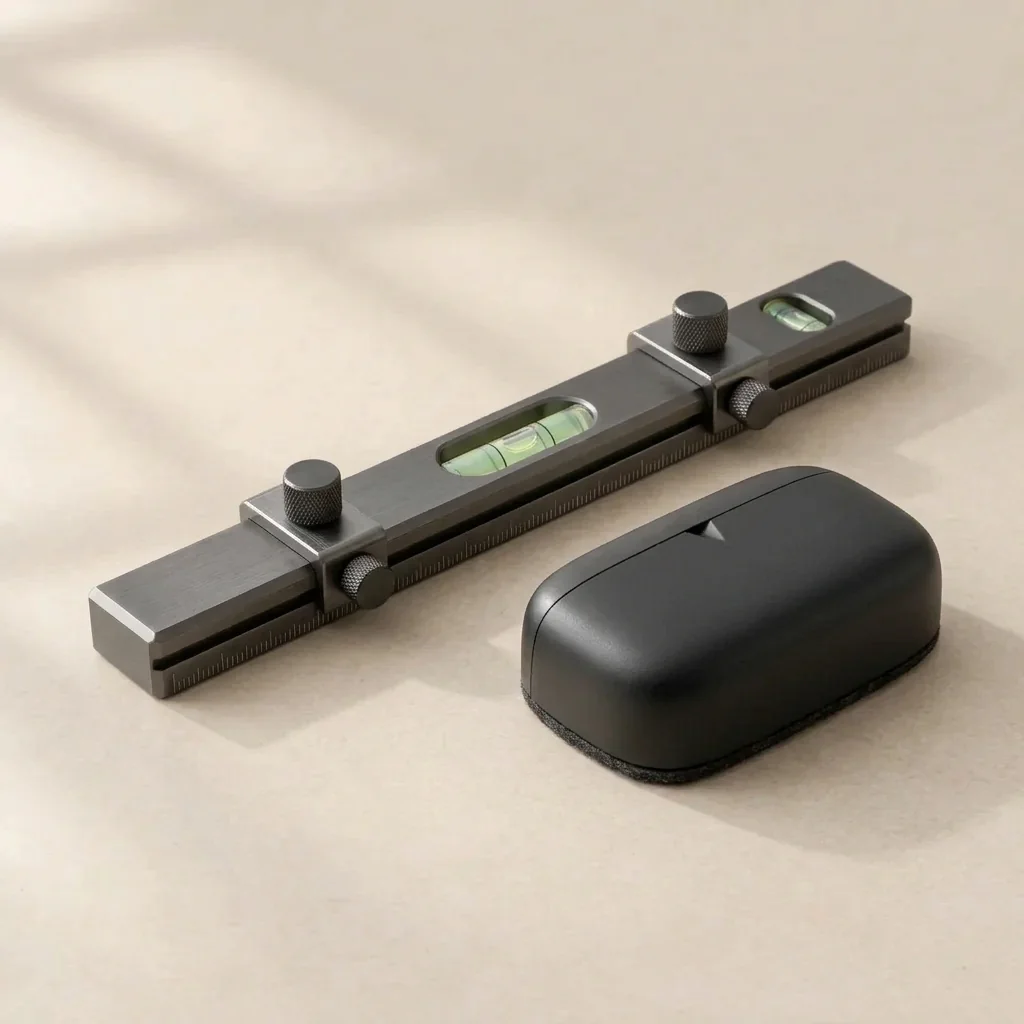
When spacing four hooks across a hallway, use a spirit level such as the Press-to-Mark Alloy Picture Level—also paired in the Wall Hanging Kit—to mark level centres before drilling.
4. Practical UK fixings and load-limit rules
Pair the fixing with the wall. A hook that sits close to the wall puts less leverage on the fixing when you hang a heavy coat:
- Timber stud: Drill a small pilot hole and drive the hanger bolt straight into solid timber for heavy coats and full rucksacks.
- Hollow `12.5 mm` plasterboard: Use metal self-drilling plasterboard anchors or hollow-wall anchors rather than basic push-in plugs. Check the fixing manufacturer’s load rating for the board’s thickness and condition, and use the lower limit given for the hook or the fixing.
- Dot-and-dab over block or brick: Bridge the air gap with a long masonry plug or sleeved dot-and-dab fixing that expands inside the blockwork behind.
- Solid brick or block: Drill to full plug depth, clear brick dust, and tap a quality nylon wall plug flush with the plaster.
If you rent and want minimal wall repairs later, read our guide to hanging frames in a rented UK flat for low-impact marking tips.
What to look for in a 4-pack wall hook kit
Look for anodised aluminium, a flat-sided profile you can grip during fitting, and a recessed hanger bolt matched to the hook. Check that the fixings supplied are suitable for your wall, whether you need plasterboard anchors or masonry plugs.
Questions
- Why does my coat hook keep spinning round on plasterboard? A single screw through a smooth round disc has no resistance to twist when coats are lifted on and off. A flat-sided hook pulled flush onto an M4 hanger bolt with a proper metal cavity anchor—or fixed into a timber stud—stops the spin.
- How do I hang wall hooks on dot-and-dab plasterboard? Skip short cavity anchors that pull out over the adhesive void. Drill through into the brick or thermalite block behind and fit a long masonry plug or sleeved dot-and-dab fixing so it grips solid masonry.
- How much weight can a plasterboard wall hook hold safely? There is no single safe weight. Check the hook and fixing manufacturers’ ratings for your wall type, board thickness and condition. Stay within the lower rating for the installed setup. For heavier loads, choose a suitable fixing in sound timber or masonry.
- Can I fit alloy wall hooks in a damp UK bathroom? Yes, provided the body is anodised aluminium rather than plated zinc and the anchor sits in masonry or a rated cavity fixing rather than unsealed grout. Wipe condensation dry periodically.