
Buying guide4 min readBy Ozyrix
Magnetic or electronic stud finder: which should you buy?
Compare magnetic and electronic stud finders for UK walls. Learn what each tool picks up, when readings can mislead and when you need a service detector.
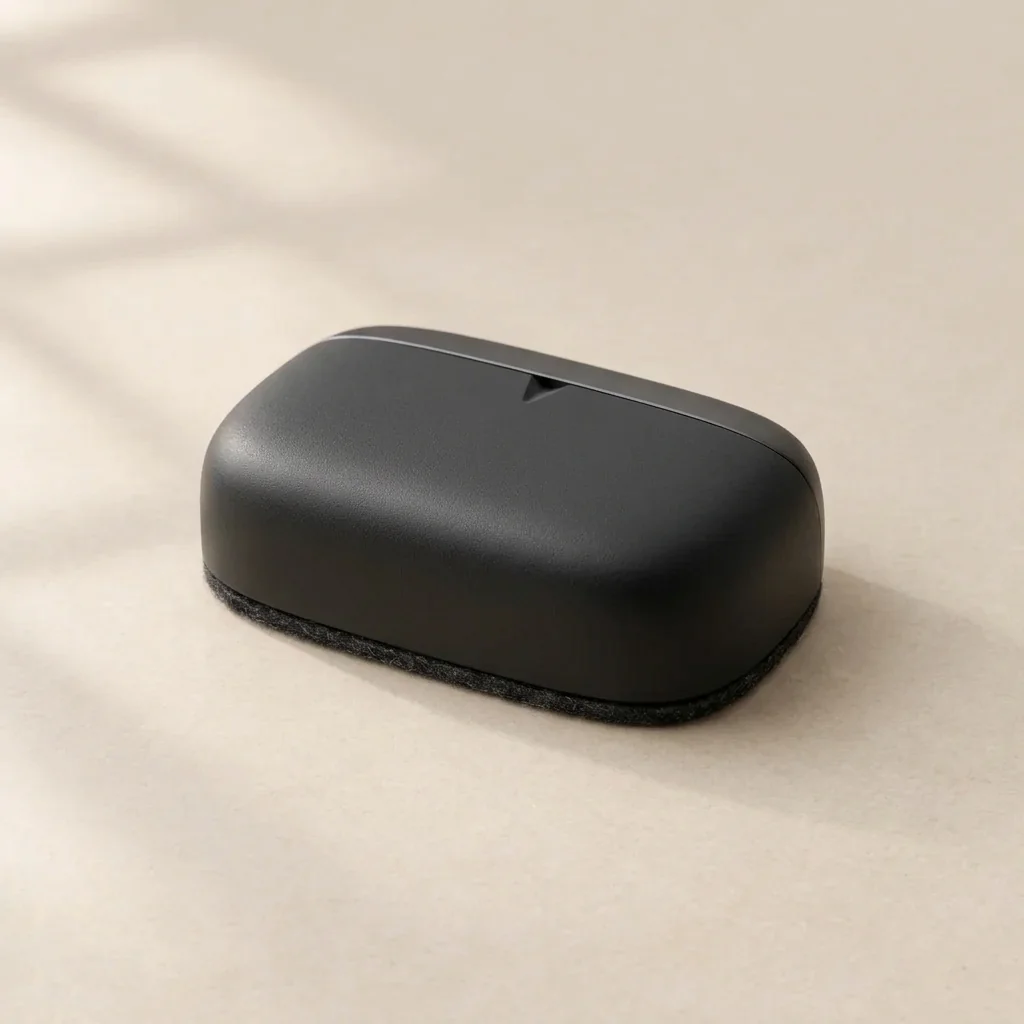
Buy a magnetic stud finder if you want to locate steel screw heads or nails behind confirmed stud plasterboard. If you need to check for buried services or investigate an unknown wall, a magnetic finder is the wrong tool for that job. Before buying either type, decide what you need the reading to tell you.
Compare the tools by what they pick up
| What you need to establish | What to use |
|---|---|
| Where a ferrous screw or nail is likely to sit behind stud plasterboard | A magnetic finder. The pull comes from metal, not from the timber itself. |
| Where a possible stud edge sits behind the board | An electronic model rated for the wall material and thickness. Check its sensing mode and follow its calibration instructions. |
| Whether concealed pipes or cables could run through a proposed hole | A separate check for services. Use a suitable cable and pipe detector and follow its limits. A clear reading alone is not proof that the spot is safe to drill. |
What an unexpected reading means
A magnetic pull at the corner of a boxed-in pipe may be a steel corner bead. A pull in the middle of a partition may be a screw in a timber or metal C-stud. The magnet cannot tell those apart. An electronic model can also give an ambiguous result: foil-backed board, multiple layers and the material behind the plaster can affect readings, depending on the model. If the reading does not repeat, don't use it to choose a drilling point.
When neither is worth buying for this job
Modern dot-and-dab has plasterboard bonded over brick or block, with a gap behind parts of the board. A 1930s brick wall may have plaster directly on the masonry, and a Victorian partition may still be lath-and-plaster. Older homes can also have newer linings. Do not buy a magnet expecting it to locate timber behind lath, or fixings in solid masonry. If you are not sure which wall you have, start with how to identify walls and find studs in UK homes.
Read for a pattern before marking the wall
On confirmed stud plasterboard, sweep across the area and look for repeat pulls above and below a point. A line can indicate a run of board fixings. A second line 400 mm or 600 mm away may fit common UK stud centres, but spacing varies. Neither reading tells you the stud centre, gives you a load rating or makes the point safe to drill.
Before drilling, check for concealed pipes and cables. Consider where switches, sockets and plumbing are on both sides of the wall. Use a suitable detector as directed. If you cannot establish a safe point, stop and ask a qualified tradesperson.
Choose the finder or the two-tool kit
The battery-free Magnetic Stud Finder has twin Ø12 mm N52 magnets for ferrous screws and nails behind timber- or metal-stud plasterboard. It does not detect live cables or pipes. The pencil notch lets you mark the spot with your own pencil. Wall fixings and pencil are not included. Keep the strong magnets away from pacemakers, other implanted medical devices, bank cards and electronics.
The finder is £19.98 total for standard Great Britain mainland delivery when ordered on its own (£15.99 for the tool and £3.99 delivery). If you also need to transfer level hanging points, the Wall Hanging Kit pairs the finder with a picture level for £32.99 total for standard Great Britain mainland delivery when ordered on its own. See the delivery policy for where orders can be sent. Check the relevant product page for availability or request a one-off stock email if the item is unavailable.
Questions buyers ask
Will a magnetic finder tell me whether the stud is timber or metal?
No. It picks up ferrous screws or nails behind stud plasterboard. A pull cannot identify what the fixing is driven into.
Is a magnetic finder better than an electronic finder for foil-backed board?
There is no universal winner. A magnetic finder needs ferrous fixings close enough to the surface. For an electronic tool, check whether the maker specifies support for foil-backed board and the wall's thickness.
Is an electronic finder worth buying if a magnet only pulls once?
One pull does not establish a stud. If you need to map a possible edge, consider an electronic model rated for the board and its thickness. If you do not know what the wall is made of, establish that before spending money on another finder.