
Buying guide6 min readBy Ozyrix
Metal C-studs vs timber studs in UK new-build flats: how to find and fix safely
Tell metal C-studs from timber studs behind UK flat plasterboard, trace the screw lines with a magnet and choose fixings that suit each type of stud.
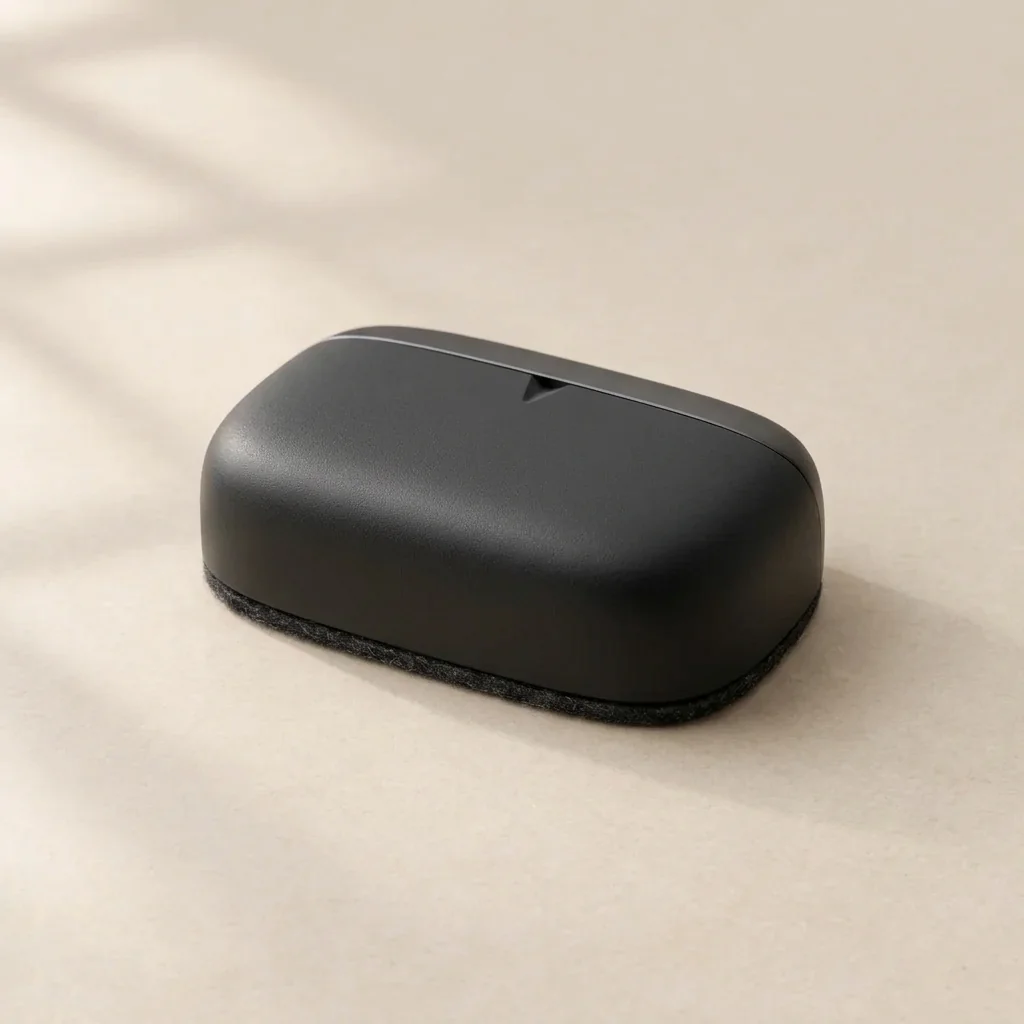
Many internal walls in UK new-build flats are plasterboard on galvanised steel C-studs. Houses, extensions and older conversions more often use timber studs. Both are usually fixed with steel screws, so a magnetic finder can trace the screw lines on either. What changes is the fixing: a wood screw that bites firmly into timber will not hold properly in thin steel.
How the two walls are built
- Metal C-stud partition. Lightweight galvanised steel studs, C-shaped in section, set into steel tracks at the floor and ceiling. The plasterboard is screwed to the stud flanges, often at 600 mm or 400 mm centres. The cavity may hold insulation for sound.
- Timber stud partition. Sawn timber studs, often at 400 mm or 600 mm centres, usually with short horizontal noggins between them. The board is screwed or nailed on.
- Board on masonry or concrete. Not every wall in a flat is a stud wall. The inside of external walls and the walls between flats may be board bonded to masonry or concrete, or a specialist sound-insulating system.
Before fixing into a wall shared with a neighbour or the common parts, check your lease or building manual. Your lease may restrict alterations to structural or separating walls. If you rent, ask your landlord before drilling. If you are not sure which wall you have, see how to find studs in UK walls.
Tell metal from timber
| Check | Metal C-stud | Timber stud |
|---|---|---|
| Magnet sweep | A vertical line of screw heads at fairly regular spacing | A vertical line of screw or nail heads; sometimes short horizontal lines at the noggins |
| Knock | Hollow between studs; knocking rarely tells metal from timber | Hollow between studs; duller over the stud |
| Handover pack | The building manual may name the partition system | The building manual or survey may describe the walls |
Neither a magnet sweep nor a knock confirms the stud material. Check the building records or ask a qualified tradesperson if you cannot identify the wall. Do not drill a test hole to find out.
Why a magnet suits stud walls
A magnetic finder responds to ferrous metal. It does not read changes in density or moisture, so a damp patch, a dab of adhesive or a change in board does not set it off. Capacitive electronic finders read density, and foil-backed board, multiple layers or damp can affect their readings, depending on the model.
A magnet has limits of its own. It needs steel screws or nails close enough to the surface. It can also pull on steel corner bead or other metal near the surface, so one pull is not a stud. Look for a vertical line of pulls. A magnet cannot tell you whether the stud behind the screws is steel or timber, and it does not detect solid timber, pipes, plastic conduits or live cables.
Mark the line, then check for services
- Sweep the finder slowly sideways at the height you want to fix. When it pulls, mark the spot in pencil.
- Repeat about 300 mm above and below. Three marks in a vertical line are a good clue to a stud; a single pull is not.
- Look for the next line along. A second line at about 400 mm or 600 mm fits common stud centres, but do not rely on spacing alone.
- Check for concealed pipes and cables with a suitable detector. Avoid likely service routes above, below and beside sockets and switches.
Metal studs often have pre-punched holes that cables and pipes can pass through, so a stud line is not automatically a safe line. A clear detector reading is not proof that it is safe to drill. If you cannot establish a safe point, stop and ask a qualified tradesperson.
Choose the fixing for the stud
| Item | Metal C-stud | Timber stud |
|---|---|---|
| Light frames and small hooks | A hollow-wall anchor rated for the board thickness | A screw into the stud, or a hollow-wall anchor between studs |
| Mirrors and heavier frames | A fixing designed for metal-stud partitions, or into backing the building already has | A screw of suitable gauge and length into the stud centre |
| Shelves, TV brackets, wall cupboards | Follow the partition maker's guidance; these loads often need backing fitted when the wall was built | Into the studs, following the bracket maker's guidance |
| Avoid | Ordinary wood screws driven into light-gauge steel | Fixing near the edge of a stud, where the screw can miss or split it |
Some new-build flats have plywood or timber backing behind the board where kitchen units or a TV bracket were planned. Check the handover pack before assuming a wall is bare studs. Whichever wall you have, use the lower of the item, hardware and fixing ratings. For more on fixing compatibility and threaded hooks, see M6 hanger bolts or screws for a threaded wall hook.
The finder for the job
The battery-free Magnetic Stud Finder has two flush-seated Ø12 mm N52 magnets at 48 mm centres and a central 90° pencil V-notch. It needs no calibration. It locates ferrous screws and nails only in timber-stud or metal-stud plasterboard walls, so it traces the screw lines on both types covered here. It does not detect solid timber itself, live electrical cables, water pipes, plastic conduits or fixings in solid masonry. Keep the strong magnets away from pacemakers, other implanted medical devices, bank cards and electronics. Wall fixings and pencil are not included.
Ordered on its own, the finder is £19.98 total for standard Great Britain mainland delivery (£15.99 for the tool and £3.99 delivery). The Wall Hanging Kit pairs it with a 300 mm picture level for transferring level hanging points with your own pencil, for £32.99 with free GB mainland delivery. The kit contains those two tools and a printed Quick-Start card; wall fixings, screws and a pencil are not included. See the delivery policy for where orders can be sent. Check the product page for current availability. If the item is not in stock, you can request a one-off stock email there. Still choosing between finder types? Read magnetic or electronic stud finder.
Questions buyers ask
Will a magnetic stud finder work on metal studs?
Yes. It picks up the steel screws that fix the board to the studs, and a vertical line of pulls is a clue to a stud. It cannot tell you whether the stud is steel or timber.
Can I screw straight into a metal stud?
Not with an ordinary wood screw. Use a fixing designed for metal-stud partitions and the board thickness, and follow its maker's load guidance.
How far apart are studs in UK new-build flats?
Often 600 mm or 400 mm between centres, but layouts vary. Find at least two lines of fixings rather than measuring from a corner.